_HERO.png&w=3840&q=75)
You found three editors on Upwork. Their reels look fine. You have an hour to interview them and no idea what to actually ask.
Google "interview questions for YouTube video editors" and the top results are written for the editor, not for you. They teach the candidate how to sound good in your interview. That is the opposite of what you need.
This is the hire-side version. 25 interview questions for YouTube video editors built for the creator running the call, not the freelancer prepping answers. Each question gets four things: why ask it, what a strong answer sounds like (with signals like the 8-second decision window or the 25 to 35 second pattern interrupt), red flags that kill the candidacy, and an optional follow-up.
I have placed hundreds of YouTube editors over the last few years. The ones who stay two and three years answer these questions in patterns that are obvious to me. The ones who churn at month two answer in patterns that are also obvious, just too late.
Bookmark this. Run it as a checklist on your next interview. Pay attention to which questions the candidate dodges. Start here.
_2.png)
Want an editor who actually sticks around?
We place dedicated YouTube video editors from the Philippines and South Africa, matched to your channel. Flat monthly, long-term, no rotating freelancers.
1. Walk me through how you would have cut my last video differently. What would you change in the first 30 seconds?
The fastest way to separate editors who watch YouTube from editors who just process files. They had to actually open your channel before this call.
What a strong answer sounds like: They name a specific video. They reference your hook in the first 8 seconds, since 55% of viewers leave inside 60 seconds. They suggest a concrete change: cut a slow intro, add a pattern interrupt at the 25 to 35 second mark, or move the value promise inside 15 seconds. Bonus if they ask for the retention graph.
Red flags:
- Did not watch a video before the call
- Generic "tighter pacing" with nothing specific to your content
- Leads with transitions or color, not viewer behavior
Follow-up: What would you do to the thumbnail to match the new opening?
2. Walk me through your full editing process from when I drop raw footage to when I get the final export.
A real editor has a repeatable system. A freelancer winging it does not. The answer tells you what to expect on day one.
What a strong answer sounds like: They describe checkpoints, not one giant deliverable: ingest and organize raw footage, AI pre-edit with Gling or Descript for silence and bad takes, assembly cut, rough cut review, B-roll and sound layer, color and audio polish, final export. They name milestone deliveries and timestamped review in Frame.io.
Red flags:
- "I just edit it and send it back"
- No mention of pre-edit AI tools (signals slow turnaround)
- Cannot estimate hours per stage
Follow-up: At which checkpoint do you want my feedback?
3. What turnaround time should I expect from raw footage to first cut, and what changes that?
Most ghosting and missed-deadline disasters trace back to a turnaround promise nobody pinned down.
What a strong answer sounds like: A range tied to length and complexity. 48 to 72 hours for a 10-minute talking-head with one B-roll layer. 5 to 7 days for a 20-minute video with heavy graphics. They name the variables: raw footage volume, revision rounds, B-roll layering, motion graphics, captions.
Red flags:
- "I can do anything in 24 hours"
- Flat promise with no range
- Same turnaround quote for a 5-minute and a 25-minute video
Follow-up: What is your typical capacity per week in finished minutes?
4. How many revision rounds are included, and how do you handle scope creep?
"Unlimited revisions" sounds great until you are on round seven with a fixed-price service that will not ship.
What a strong answer sounds like: They name a number, usually 2 included rounds with a third for emergencies. They define a round as a batched set of timestamped notes, not 30 individual messages. Out-of-scope changes get an hourly add-on, separate quote, or push to next video.
Red flags:
- "Unlimited" with no friction
- No definition of what triggers an additional round
- No process for distinguishing scope changes from corrections
Follow-up: What does your revision delivery turnaround look like?
_1.png)
5. How do you want me to deliver raw footage, brand assets, and references for each video?
File hygiene is the most predictive single signal you have. Editors who score 80% or higher on file hygiene in a test edit require 67% fewer hand-offs in ongoing production.
What a strong answer sounds like: They request a folder structure (00_RawFootage, 01_Assets, 02_References). They mention Google Drive, Dropbox, or Frame.io Camera-to-Cloud. They ask about file naming, codec, frame rate, and aspect ratio.
Red flags:
- "Just send it however"
- "WeTransfer is fine" with no follow-up questions
- No questions about brand assets or references
Follow-up: Do you want a one-page style guide with each video?
Now we shift from process into the questions that separate YouTube editors from generic editors.
6. What is the biggest retention mistake you see YouTube creators make in their first 60 seconds?
Alex Berman recommends this exact question as a job-post filter. Editors who do not watch YouTube cannot answer it. Editors who do, light up.
What a strong answer sounds like: They reference the 8-second decision window, the 55% drop-off inside 60 seconds, or the 1-minute wall. They name a specific failure pattern: generic "hey guys welcome back," overlong logo sting, value promise buried past 15 seconds, missing pattern interrupt at 25 to 35 seconds, or thumbnail-to-hook mismatch. They give a real-channel example.
Red flags:
- Aesthetic-only answers like "bad music choice"
- Cannot name a specific failure pattern
- Talks about transitions instead of viewer behavior
Follow-up: Which YouTube channels have the best editing right now, and why?
7. How would you build the first 30 seconds of one of my videos? Walk me through it second by second.
Generic retention talk is cheap. Asking them to architect a hook for your channel, live on the call, is not.
What a strong answer sounds like: They name a hook type (question, shock, tease, before-and-after). They place the value promise inside the first 15 seconds (videos that do this see 18% higher 1-minute retention). They schedule a pattern interrupt at the 25 to 35 second mark. They reference your specific content type.
Red flags:
- Lists transitions instead of structure
- Treats the hook as a separate intro instead of integrated to the body
- Cannot speak in seconds
Follow-up: How would you change that hook if my CTR dropped 40% on the last upload?
8. How do you keep viewers watching past minute 8 on a long-form video?
Minute 8 is where loyalty compounds and YouTube increases suggested placement. Most editors edit for the first 90 seconds and let the rest collapse.
What a strong answer sounds like: They reference a named cutting pattern: Progressive Rhythm (tight 0-3, stabilization 3-7, mixed energy 8 plus), Contrast (oscillating calm and burst), Narrative Loop (callbacks every 2-3 minutes), or Anchor Pattern (cuts on emotional beats, not time). They mention mid-roll callbacks or open loops. Bonus: they reference the 16% of viewers who reach the final 10 seconds.
Red flags:
- "Just keep it interesting"
- No structural language
- Treats long-form as a longer version of short-form
Follow-up: What do you do differently at minute 8 vs minute 12?
9. How do you decide where to layer B-roll versus letting the talking head breathe?
B-roll choices reveal taste. The wrong cadence makes a video feel either frantic or dead. There is no third option.
What a strong answer sounds like: They tie B-roll to specific narrative moments (concept introduction, jargon, story illustration), not "every 10 seconds." They let the talking head hold for emotional beats. They cut on beat shifts, not on a clock. They ask about your B-roll library and whether they should source new footage.
Red flags:
- "I add B-roll everywhere"
- No editorial reasoning
- Cannot describe when NOT to cut
Follow-up: What do you do when a video has no usable B-roll?
10. How do you coordinate the edit with the thumbnail and title so they actually match?
Thumbnail-and-title is the contract you make with the viewer. The first 8 seconds either pays it off or breaks it. Mismatch is a documented retention killer.
What a strong answer sounds like: They want to see the thumbnail and title before finalizing the cut. They design the opening to pay off the thumbnail visual. They mention CTR as a metric they track. They might suggest specific shots from raw footage that should appear in the thumbnail.
Red flags:
- "Thumbnails are not my job"
- Never asks to see them
- Treats the edit and the package as separate problems
Follow-up: How do you handle a video where the thumbnail concept changes mid-edit?
11. How would you cut my long-form videos into Shorts that actually perform?
Shorts is where the next subscriber comes from for most channels. If your editor cannot repurpose, you are paying twice.
What a strong answer sounds like: They name a repurposing tool (OpusClip, Vizard.ai, or manual). They mention Submagic or CapCut for animated captions. They pick clips by standalone payoff, strong opening hook, and vertical reframe potential. They ask how many Shorts you want per long-form upload.
Red flags:
- Uses OpusClip without reviewing the output
- Cannot name a repurposing tool
- Same turnaround quote for 6 Shorts as for 1 long-form
Follow-up: What is your hit rate on Shorts that crack 100k views?
From here we get into the toolkit and how they communicate inside it.
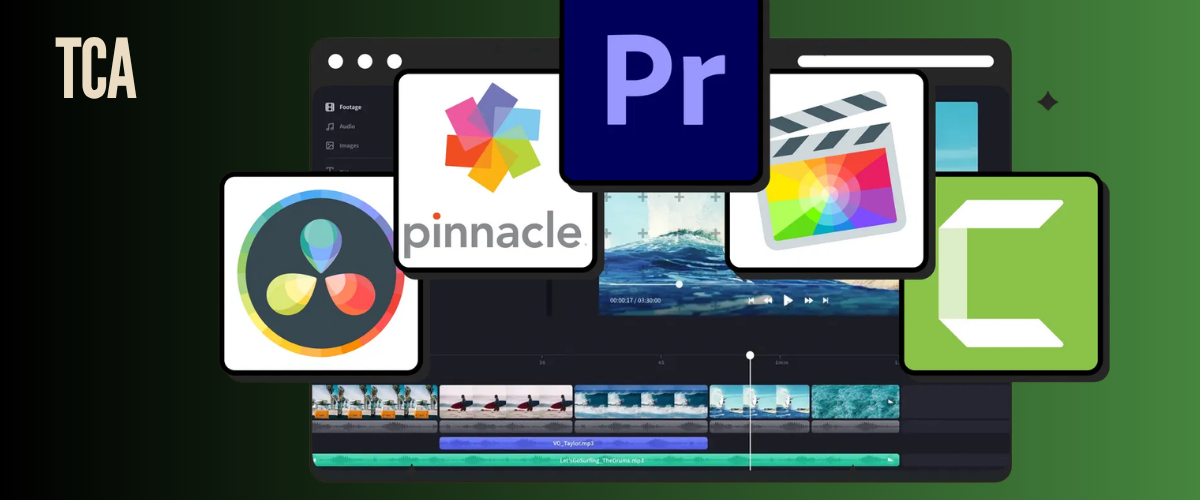
12. What is your primary editing software, and what would you switch to if I asked?
Your editor's NLE choice will become your team's NLE choice. Make sure they can switch if needed.
What a strong answer sounds like: They name Premiere Pro, DaVinci Resolve, or Final Cut Pro as primary, with reasons (DaVinci for color, Premiere for collaboration, Final Cut for speed on Mac). They have working knowledge of at least one alternative. They ask which NLE your team uses for clean handoffs.
Red flags:
- "I only know Premiere and would not switch"
- Cannot name benefits of either alternative
- Has not tried DaVinci even though it is free and industry-standard for color
Follow-up: Are you comfortable working in a project file someone else built?
13. Which AI tools are in your 2026 stack, and which ones do you refuse to use?
Heavily AI-generated videos show 70% lower retention than human-fronted alternatives. Monotonous AI narration triggers 35% drop-off within 45 seconds. The right answer is fluent AND selective.
What a strong answer sounds like: Gling or Descript for silence and bad takes. OpusClip or Vizard for repurposing. Submagic for captions. Adobe Sensei or DaVinci Neural Engine for polish. They REFUSE AI for narration, scripts, or anything that replaces creative judgment. They can explain where AI saves hours and where it costs retention.
Red flags:
- "I never use AI" (slow workflow)
- "AI does most of the edit" (quality risk)
- Cannot name specific tools
Follow-up: When was the last time you turned an AI feature off because it made the video worse?
14. How do you want to receive feedback, and which tool do you use for timestamped review?
The biggest relationship killer in editor-creator work is not giving enough direction. The wrong feedback tool produces the same problem from the other side.
What a strong answer sounds like: They name Frame.io as primary (frame-accurate comments, drawn annotations, revision history). Frame.io reduces projects by one full revision round vs email-based review. They might add Loom for walkthroughs and Slack for quick questions. They ask about your existing Frame.io workspace.
Red flags:
- "Just text me your notes"
- Email-only review
- Has never used Frame.io or any timestamped review tool
Follow-up: What do you do when feedback is vague, like "pacing feels off"?
15. What project management tool do you live in, and how do you keep me updated on status?
An editor who needs you to ask for status is one you have to manage. An editor who pushes status to you is one you can trust.
What a strong answer sounds like: They name Notion, ClickUp, Trello, or Asana. They describe a cadence: rough cut Monday, your feedback by Tuesday, revision Wednesday. They might offer to set up a shared board. Loom updates when text is not enough.
Red flags:
- "I just keep it in my head"
- No tool, no cadence
- Requires you to drive every status check
Follow-up: How often should we sync vs go fully async?
The next cluster is reliability. This is where most hires fail.
16. What hours do you actually work, and how much overlap do we have in my time zone?
A 24-hour delay caused by time zone gaps turns a one-day revision into a week. Pin the overlap before it bites you.
What a strong answer sounds like: Specific working hours in their local time AND yours. They commit to a 2 to 3 hour daily overlap minimum. They mention async tools (Loom, Frame.io) that compress non-overlap pain. LatAm-based editors flag EST or PST alignment as a feature.
Red flags:
- "I am flexible" (no commitment)
- Cannot quote your time zone in their answer
- Promises 24/7 coverage (unsustainable)
Follow-up: What does your day look like when I send notes at 9pm my time?
17. How many hours per week of editing can you actually deliver for me, and is that exclusive?
"Unlimited" plans typically cap at hidden hourly limits. "Flexible" capacity usually means you are sharing them with five other channels.
What a strong answer sounds like: A specific hours-per-week number (typically 20 to 40 full-time, 10 to 20 part-time). They tell you how many other clients they have and roughly how many hours each takes. They map hours to your output goals ("40 hours covers two long-form plus four Shorts a week").
Red flags:
- "As much as you need"
- No client count disclosure
- Cannot map hours to deliverables
Follow-up: What happens if I need an extra video that week?
18. What happens to my upload schedule when you get sick, take time off, or have a family emergency?
Solo freelancers have no contingency. One week of missed uploads can hurt algorithmic momentum for months.
What a strong answer sounds like: A backup editor (named, ideally), a documented style guide that backup can reference, and a buffer week of edits banked when possible. Specific notice expectations (1 to 2 weeks for planned PTO). Agency or placement-service editors reference bench coverage as a feature.
Red flags:
- "I never get sick"
- No backup plan at all
- Has gone dark on past clients (probe for specifics)
Follow-up: When was the last time you missed a deadline, and what did you do about it?
19. What is your typical response time to a Slack or email message during my work hours?
Mismatched response-time expectations destroy relationships before the first video ships. Get the SLA on the table now.
What a strong answer sounds like: A specific number, typically same-day during overlap and within 24 hours otherwise. They distinguish urgent (Slack red flag) from non-urgent (Frame.io comment). They tell you what to do if they are unavailable.
Red flags:
- "I check messages constantly"
- No distinction between channel types
- Cannot quote a number
Follow-up: What is your weekend policy?
20. How do you handle vague feedback like "the pacing feels off" without burning a revision round?
Every creator gives vague feedback sometimes. The editor's response defines whether the relationship survives month three.
What a strong answer sounds like: They send a quick Loom with clarifying questions. They suggest concrete options ("Do you mean too slow in the middle, or the music does not match the energy?"). They reference timestamped follow-up. Maturity, not defensiveness.
Red flags:
- They guess and rebuild without asking
- They get defensive ("your feedback is unclear")
- They demand a sync call for every ambiguity
Follow-up: Tell me about a time you and a creator disagreed on a creative call.
Last cluster: trust, IP, and whether this person actually wants to be on your channel for the long haul.
21. How do you protect my raw footage and IP, and would you sign an NDA?
Production farms with identical websites and testimonials are a documented red flag. Your raw footage is monetized IP.
What a strong answer sounds like: They readily agree to an NDA. Time-limited cloud folder access (expiring share URLs in Frame.io or Google Drive). They confirm they do the work themselves, no undisclosed subcontracting. Any subcontractor is disclosed and also under NDA.
Red flags:
- Refuses to sign an NDA
- Vague about who actually does the work
- No password or share-link expiration practice
Follow-up: How would you handle leaked footage if it happened?
_4-youtube-channel.png)
22. When in our relationship are you expecting access to my YouTube channel, and what kind?
Trust develops through delivery first, then access expands gradually. Day-one channel access is a red flag in either direction. So is "never."
What a strong answer sounds like: Zero channel access in month one. Manager-level (uploads, descriptions, no analytics) after 3 months of proven delivery. Anything sensitive (monetization, revenue) only after 6 plus months and ideally on a full-time contract. They might suggest YouTube Studio role-based permissions.
Red flags:
- Wants account login on day one
- Refuses any access ever
- Does not know about YouTube role-based permissions
Follow-up: Have you been managing channel uploads for any creator currently?
23. Why do you want to work on MY channel specifically, and not a different one?
The candidates who stay have a real reason for picking your channel. The ones who churn at month four cannot articulate one. This question filters the mercenaries.
What a strong answer sounds like: They reference a specific video, topic, or audience type from your channel. They name something about the niche that genuinely interests them. They tie your content to their own growth goals ("I want to specialize in long-form educational content").
Red flags:
- "Your channel looks great"
- Cannot name a video
- Generic "I love editing"
- Treats your channel as interchangeable
Follow-up: What channels do you watch in your free time?
24. What types of editing projects do you not enjoy, and what would make you leave a creator?
Editors who refuse to acknowledge any limits hit them silently and burn out. The honest answer here is a feature, not a bug.
What a strong answer sounds like: They name 1 to 2 specific project types they avoid (wedding-style highlights, pure motion graphics). They name realistic churn triggers: scope creep without rate adjustment, no creative input, vague feedback culture, late payments. They have thought about what makes them stay.
Red flags:
- "I love everything"
- "I would never leave a good client"
- Cannot name a single project type they dislike
- No churn triggers (signals naivety or rehearsed answer)
Follow-up: Why did you leave your last long-term creator?
25. Where do you want to be in two years, and how does working with me get you there?
Editors who stay 2 to 3 years have a growth path that maps to the role. Editors with no plan leave for the next slightly-better offer.
What a strong answer sounds like: A specific 2-year picture: lead editor, head of production, small editing team, owning the Shorts pipeline. They tie that path to your channel's likely growth. They name what helps them get there: rate progression, creative autonomy, occasional skills budget.
Red flags:
- No 2-year picture
- "I just want to keep editing"
- Goals that conflict with yours ("I want to start my own agency in 6 months")
Follow-up: What rate progression do you expect over the first 18 months?
A few last questions creators ask me before they run this list.

FAQ: hiring a YouTube video editor in 2026
How long should a video editor interview take?
30 to 45 minutes. Shorter and you cannot run this list. Longer wastes both sides. I split mine into 10 minutes on process and tools, 15 on YouTube creative, 10 on reliability and long-term fit, and 5 for their questions. The candidate's questions are data too.
Should I pay for a sample edit?
Yes, always. Unpaid tests attract desperate applicants and inaccurate work. Paid tests attract professionals. Pay $50 to $200 for US-based editors, the editor's stated hourly rate for offshore. Send 5 to 10 minutes of raw footage, a one-page style guide, 2 to 3 references, and a 4-hour window. Score on file hygiene.
What is a fair rate for a YouTube editor in 2026?
Per-video: beginner $10 to $40, intermediate $40 to $150, professional $150 to $500 plus. Full-time monthly: Filipino senior editors $1,760 to $2,640, US intermediate $7,200 plus. Retainers beat per-video for long-term hires because incentives align. We place dedicated full-time editors at $1,800 to $3,000/month all-in.
Should I hire a freelancer, agency, or placement service?
Freelancer: cheapest, highest churn, no backup. Agency: handles continuity, marks up hours, often rotates editors. Placement service: pre-vetted full-time editor with retention support, no markup. The right pick depends on your tolerance for management overhead. If you do not want to vet 50 applicants yourself, a placement service buys back the hiring time.
How do I know an editor is a long-term fit, not a 3-month hire?
Three signals during the interview. They watched your channel before the call. They name specific churn triggers honestly. They describe a 2-year picture that maps to your role. The editors who stay longest also ask about rate progression upfront. Not mercenary, just thinking long-term.
What red flags should I never ignore during the interview?
Six dealbreakers. They cannot connect editing decisions to retention or watch time. They get defensive about ambiguous feedback. They have no backup plan for sick days. They refuse to sign an NDA. They claim AI handles the whole edit (70% retention drop on AI-heavy content). They cannot name a single project type they dislike. Any one and you keep interviewing.
If you want to skip the 50-applicant funnel, the paid test edits, and the month of vetting, that is what we do at TCA. Dedicated full-time YouTube editors from the Philippines and South Africa, placed in 2 to 3 weeks, $1,800 to $3,000/month all-in. Get started here.

.png&w=3840&q=75)
_HERO.png&w=3840&q=75)